
Smile Patterns
Which Smile Pattern Do You Have? Find Out Now!
Breaking Down Smile Patterns
As mentioned above, there are millions of different smiles – essentially as many as there are individuals – three basic smile patterns have been identified.
Plastic surgeons given the task of rehabilitating smiles have identified three neuromuscular smile patterns:
- Commissure Smile Pattern
- Cuspid Smile Pattern
- Complex Smile Pattern
Visit The Studio
Book Your Consultation Today!
Commissure Smiles
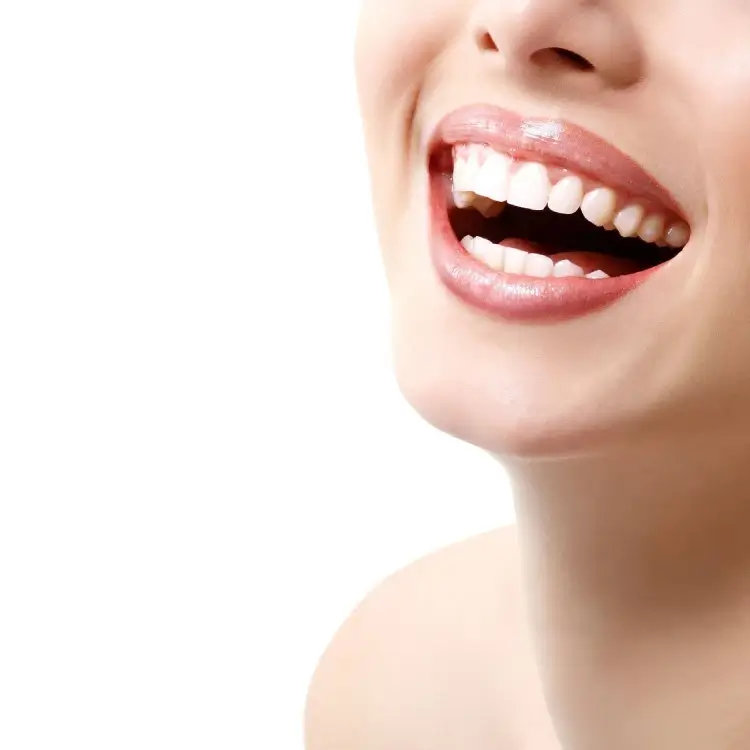
The commissure smiles is the most common pattern, seen in approximately 67% of the population. In this smile, typically thought of as a Cupid’s bow, the corners of the mouth are first pulled up and outward, followed by the levators (muscles) of the upper lip contracting to show the upper teeth. The lowest incisal edge of the maxillary (upper) teeth are the central incisors. From this point, the convexity continues superiorly with the maxillary first molar being 1 to 3 mm higher than the incisal edge of the centrals.
A spontaneous commissure smile results in a maximum of movement of the commissure from 7 to 22 mm. Likewise, the average direction of movement of the commissure is 40 degrees from the horizontal (range 24 to 38 degrees).
For personalities with recognizable commissure smiles, think of Sienna Miller, Paris Hilton, Drew Barrymore, and Jennifer Lopez.

Google Reviews

 Trustindex verifies that the original source of the review is Google.Trustindex verifies that the original source of the review is Google.Trustindex verifies that the original source of the review is Google.Trustindex verifies that the original source of the review is Google.Trustindex verifies that the original source of the review is Google.Trustindex verifies that the original source of the review is Google.Trustindex verifies that the original source of the review is Google.Trustindex verifies that the original source of the review is Google.Trustindex verifies that the original source of the review is Google.Trustindex verifies that the original source of the review is Google.
Cuspid Smiles
The cuspid smile is found in approximately 31% of the population. In this smile, the shape of the lips is commonly visualized as a diamond. Cuspid smile pattern is identified by the dominance of the levator labii superioris. They contract first, exposing the cuspid teeth. Then the corners of the mouth contract secondarily to pull the lips upward and outward. The corners do not move as much as they do in the commissure smile. The corners of the mouth are often inferior to the height of the lip above the maxillary cuspids.
Often, in this smile pattern, there is a similar inferior turn of the maxillary premolars as opposed to the continuous convexity of a commissure smile, this “gull wing” effect is silhouetted by the gingival tissues, which correspondingly mimic the shape of the upper lip.
In cuspid smiles the maxillary morals are often at or below the incisal edge of the central incisors. Celebrities with this pattern include Eva Longoria, Angelina Jolie, Tom Cruise, and Jennifer Aniston.


Complex Smiles
The complex smiles is found in only about 2% of the population. Both upper and lower lip are actively pulled during smiling. The levators of the upper lip, the levators of the corners of the mouth, and the depressors of the lower lip contract simultaneously, showing all of the upper and lower teeth concurrently.
The key characteristics of this smile is the strong muscular pull and retraction of the lower lip downward and back. In this pattern, both maxillary and mandibular occlusal planes are generally parallel, like two chevrons.
For celebrated personalities with complex smiles, consider Julia Roberts, Oprah Winfrey, Cameron Diaz, and Britney Spears.
The Stages of a Smile
It is important to realize that a smile moves. It animates. It’s not like a cavity, which is static and does not change before the dentists eye (let’s hope not, anyway). Gum disease stays the same, regardless of whether the person is talking or not talking.
A smile is dynamic. You can’t look at patients with their lips closed and predict what they are going to look like when they smile. So when we are analyzing smiles, we have to look at four parts of the smile cycle:
(I) The look when the patient’s lips are together.
(II) The look when their lips are slightly parted – and how much tooth is showing.
(III) The look when it’s what we would call a normal smile – the three-quarters smile, the not quite full smile people use when being photographed.
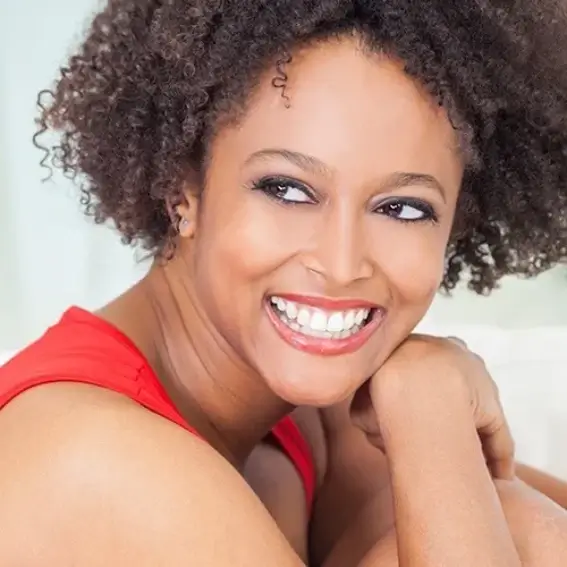
(IV) The look when the smile is exaggerated and wide, when someone is laughing wholeheartedly.
These four stages are therefore termed:

Stage I
Lips closed

Stage II
Resting display

Stage III
Natural smile (three- quarters)
Stage IV
Expanded smile (full)
Cosmetic Dentists can use these stages to describe what the smile would look like at various points in the smile cycle. What matters is not just that smile once it has been achieved, but the whole progression of the smile, from the closed, resting stage to the fully expanded stage. I call this animation.
Of course, smiles vary and are unique to each individual. Many smiles do not differ much from a natural smile to an expanded smile. In these cases, treatment can often be restricted to the maxillary or mandibular anterior front six teeth. Other smiles differ greatly between these two stages, in which case the treatment plan to aesthetically improve the smile must be extended to a greater number of teeth.